
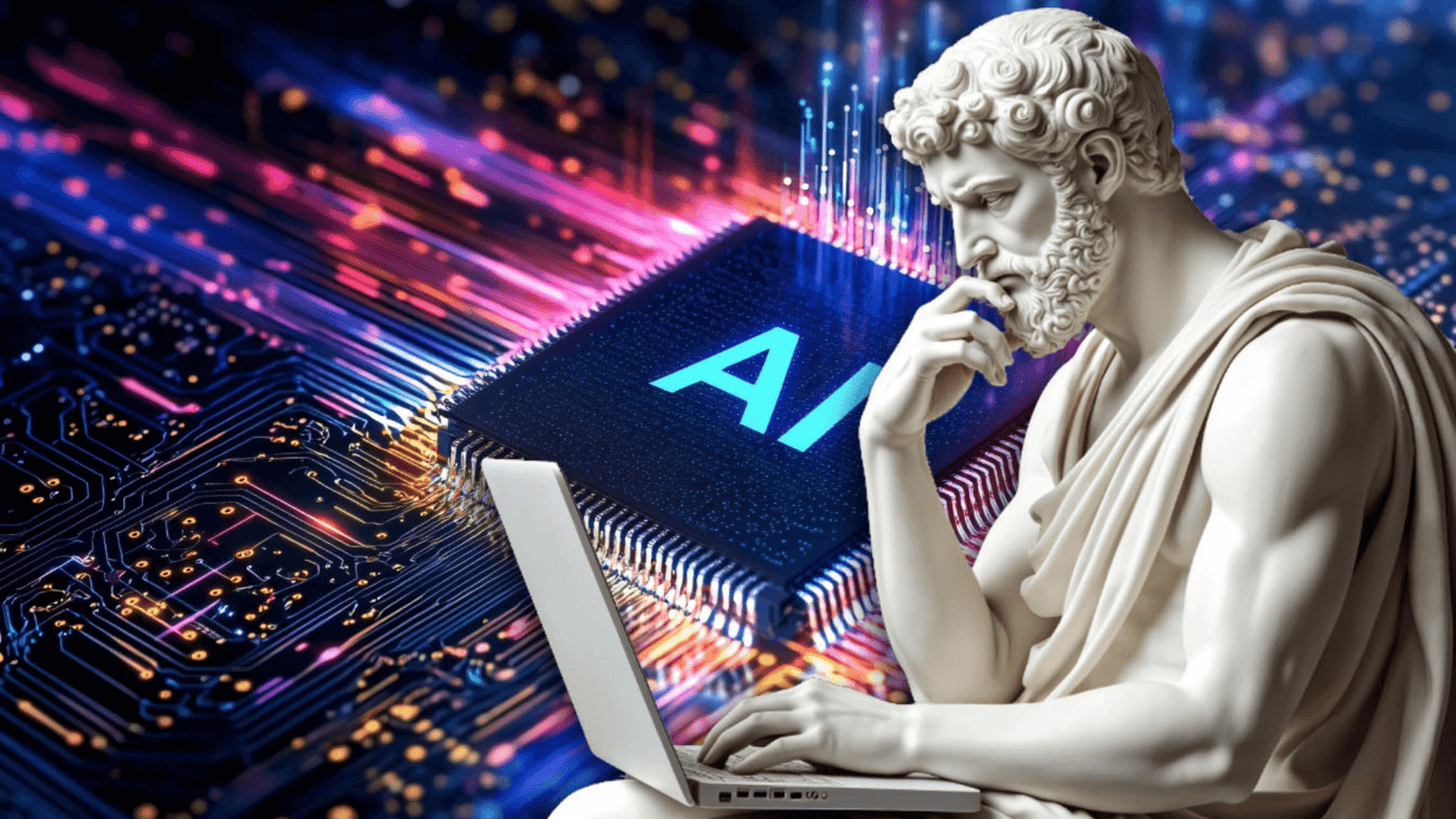
Artificial intelligence is moving at a speed never seen before, but there is a question we can no longer put off: does technology have the wisdom to govern itself?
In mid-September Dario Amodei, CEO of Anthropic, published the essay We Must Pace the Frontier, in which he calls for slowing the growth of model capabilities before it outpaces our ability to understand and govern them. The alarm comes from the world's most advanced laboratories, but the question is an ancient one: Socrates and Plato already posed it.
Téchne and sophia: knowing how and knowing why
- Téchne (knowing how): this is today's AI. An extraordinary executive competence capable of producing disruptive effects but, like any téchne separated from sophia, lacking knowledge of the good toward which to direct it.
- Sophia (wisdom): knowledge of the right ends, the wisdom that allows us to establish why and for whom to act, directing téchne toward the common good.
Plato tells of Prometheus, who gives men the technè: only thanks to the intervention of Zeus, who through the god Hermes grants them respect and justice, is the extinction of the human race averted.
The AI paradox: we create what we do not understand
We are creating something that acts on the plane of being (ontological plane) but that we increasingly struggle to understand and govern on the plane of knowledge (epistemological plane). From this follows, in my view, a guiding rule:
AI's ontological speed cannot exceed the pace of human epistemological knowledge.
Amodei translates it into operational terms: time for interpretability, independent evaluators, shared standards. But without sophia technology remains blind: the power of a tool is useless, if not harmful, if those who design and use it do not know how to direct it toward the common good.
How to avoid the "digital cave"
In Book VII of the Republic, the prisoners of the cave mistake shadows for reality. Today's risk is accepting the outputs of generative models as truth, without questioning their origin. This is why philosophy, ethics, and the humanities must return to the center of technological development. Technology is running, but the reins must remain firmly human.
A reflection for those who lead a business
As we delegate more and more tasks to artificial intelligence, what is the one human faculty we are not willing to surrender to the algorithm?
If computing power is no longer a limit, what ethical responsibility do we choose to take on today as the guide of this tool?
Artificial intelligence is an extraordinary ally to welcome and make the most of, provided that human critical thinking always charts its course.
Article edited by Silvia Taretto, CEO of Impresoft Syscons